
Your gift powers design for all. As a volunteer-powered 501c(3) nonprofit, we rely on the generous giving of our supporters to bring free and affordable programs to 10,000+ people citywide every year.
- June 26, 2026
- News and Announcements
Mithun at SDF 2026: IN[FLUX]
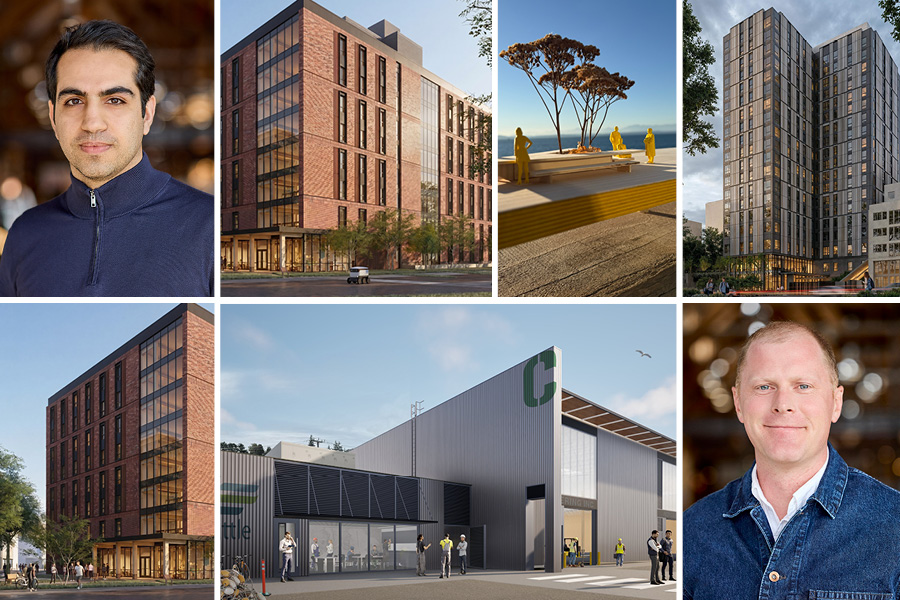
We’re thrilled to have Mithun back at the Block Party this year with Sky Patch, a transformation of ordinary and reusable construction materials into a contemplative public space exploring weight and lightness, enclosure and openness, light and shadow.
“Visitors experience gradual separation from a world that is constantly in[flux] as they move through a composition of layered elements to a central space that frames a patch of sky. This framed void at the center invites inward reflection as visitors sit, recline, and observe the changing sky and world outside.” – Mithun team
Get to know the Mithun SDF team
Alborz Nasari
Associate / Architect (he/him)
Alborz Nazari is an associate and architectural designer at Mithun, working across design, sustainability, and urban experience. His architectural path began in Iran, where early practice and built projects shaped the way he approaches design. His work explores material expression, atmosphere, and the relationship between people and place. Now based in Seattle, Alborz brings a perspective shaped by culture, memory, and context. He is interested in creating thoughtful, resilient spaces that respond to change, climate, and diverse communities while supporting connection and belonging.
Matt Kikosicki
Associate / Architect (he/him)
Matt Kikosicki is an associate and architectural designer at Mithun. His interest in public and civic architecture was cultivated growing up in a small New England town where the library, town hall and post office were the centers of community life. He is interested in architecture that asks big questions and makes you look twice. He is a frequent critic at the University of Washington and strives to maintain the vitality and energy of the academic studio environment into his professional work.
Q & A with Alborz & Matt:
IN[FLUX] in design is…
Alborz: IN[FLUX] in design is the condition of living in a world that is always changing, while still holding onto the human needs that remain constant. Cities evolve, climates shift, technologies advance, and cultures transform. But people still need places to gather, communicate, feel comfortable, and belong. For me, architecture lives between these two realities: change and continuity.
IN[FLUX] is not only uncertainty. It is an invitation for design to create meaningful spaces that help people feel grounded, connected, and open to one another as life continues to unfold.
How can design respond to IN[FLUX] – constant change and uncertainty?
Matt: Engaging with uncertainty is one of the most exciting aspects of our work as designers. We listen, synthesize and speculate to imagine futures where communities and organizations are stronger, more cohesive, and more effective. The life of a project truly starts when our work is finished. Our project work is often merely an opening move so we work to ensure that what we are proposing is a clear step toward a better future condition.
Who or what inspires you?
Alborz: I am inspired by the city as a living place — shaped not only by buildings, but by people, routines, memories, and small moments of gathering. A street corner, a courtyard, or a simple threshold can reveal how deeply a place is lived. What moves me most is the complexity behind those moments: different backgrounds, hopes, and ways of seeing the world coming together. Architecture has a responsibility to make room for that complexity with care. I am drawn to quiet, generous spaces that support daily life with dignity. I am also inspired by collaborators — designers, builders, and community members — who remind me that meaningful design is never shaped by one voice alone.
My favorite thing about where I live is…
Matt: Seattle is an incredible city to practice architecture. It is a vibrant urban place that is also completely intertwined with the larger ecological context of the Puget Sound. The pervasive presence of water and mountain ranges is a constant reminder of the greater context impacted by our work and our responsibility to be advocates for both the city and the environment.
What design story or object most strongly influenced your interest in design?
Matt: A fourth-grade field trip to the Beinecke Library on a cold gray day was the first time I experienced the power of architecture to create a complete atmosphere around a building. I was hooked after that. Alborz: I have always been influenced by simple architectural moments that carry more meaning than they first reveal — a doorway, a stair, a framed view, a change in light, or a shaded place where people naturally pause. These quiet elements showed me that architecture does not need to be loud to be powerful. What shaped my interest in design was the realization that space can change how people feel, move, and connect. A small gesture can create comfort, memory, or belonging. That quiet power is what first drew me to architecture, and it still guides how I think about design.
What is your ultimate goal when it comes to your work? What do you hope to contribute?
Matt: I am inspired to work on projects that serve communities. A successful project to me is one that becomes integrated with the public life of a community and its civic infrastructure.
How should community influence design?
Alborz: Community should not be treated as an external voice to consult later, but as part of the intelligence of the project. A community carries memory, need, conflict, and aspiration. When design listens to that complexity, it can become more than a building; it can become a shared civic space.