Your gift powers design for all. As a volunteer-powered 501c(3) nonprofit, we rely on the generous giving of our supporters to bring free and affordable programs to 10,000+ people citywide every year.
Soft Horizon is an interactive tryptch installation that visualises how environments, perception, and material systems remain in continuous states of transition. Designed for the Seattle Design Festival 2026 theme IN[FLUX], the work reflects a world where stability cannot be fixed, and meaning emerges through ongoing community interaction.
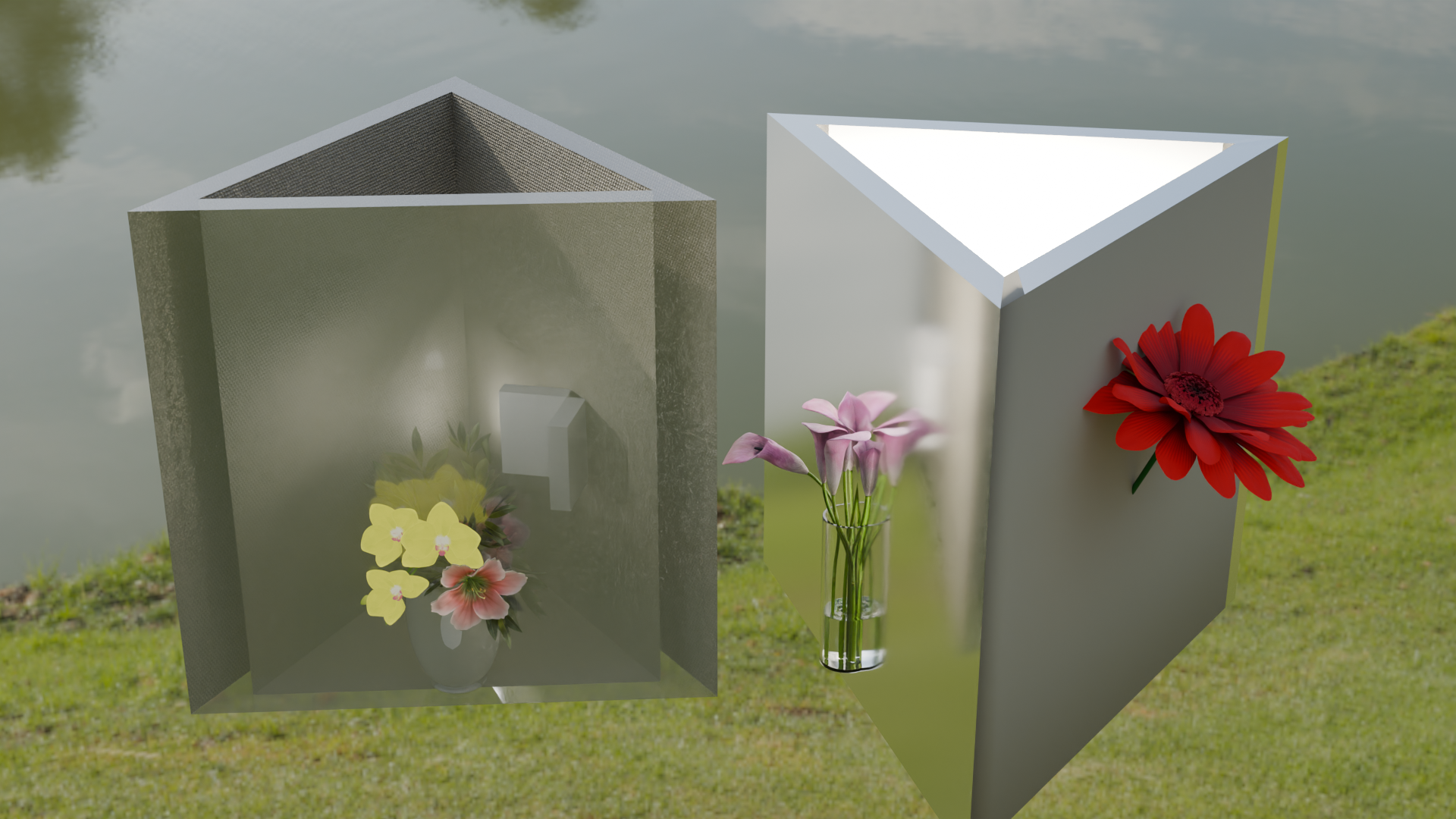
The installation takes the form of a triangular structure composed of layered translucent surfaces like white canvas sheets, thermochromic fabrics integrated with LED lights and sensors. Each face operates as an interconnected field of experience, shaped by light, motion, and material responsiveness. This allows the users to shape the art piece according to their perception of a composed Haiku.
Rather than presenting a singular image or narrative, Soft Horizon constructs an evolving perceptual environment, one that shifts as viewers approach, interact, and move around it. Across its three faces, the work explores different modalities of change. One surface is driven by atmospheric variation, where diffused light and shadow continuously reconfigure visibility, suggesting shifting environmental conditions. Another surface focuses on organic transformation, where mechanical floral forms and thermochromic materials respond to interaction through gradual movement and lingering thermal memory. The third surface engages perceptual motion, where rotating light and shadow systems generate fleeting presence suggesting movement, attention, and disappearance.
Soft Horizon is a system that resists immediate resolution. Viewer interactions through external components trigger environment change rather than isolated effects. They subtly bias a shared “flux” state that influences all three faces simultaneously. Changes unfold unevenly and persist beyond interaction and hence the system always stays IN[FLUX]. Light does not simply switch states but diffuses, scatters, and lingers. Mechanical petals retain subtle traces of prior movement. Thermochromic surfaces preserve temporary inscriptions of heat and touch, allowing the installation to accumulate memory over time. In this way, Soft Horizon foregrounds duration, residue, and partial transformation as central design principles.
Guiding the experience are Haiku poems that function as perceptual thresholds rather than explanations. These texts are not instructional or descriptive; instead, they act as entry points into slower modes of attention guiding. They invite viewers to engage with the installation through intention and mood, aligning perception with the rhythm of the system rather than directing behavior. Soft Horizon frames viewer interaction as participation within a non-steady environment rather than control over discrete elements. It asks how small actions propagate through interconnected systems, how attention leaves physical traces, and how change is distributed across time, material, and perception. In doing so, the installation becomes a micro-environment of transition, reflecting broader ecological, technological, and urban systems in flux.